Everglades Weather & Best Time to Airboat
A month-by-month climate guide to the South Florida Everglades — temperatures, rainfall, humidity, gator activity and the best times of day and year to airboat and fish. Written by native Everglades captains who read this sky every single day.
 “Text or call me and I’ll get you out on the water — I can’t wait to see you out in the swamp!”— Captain Billy, owner & native Everglades guide
When Is the Best Time to Visit the Everglades?
The short answer: the dry season, roughly November through April, is the most comfortable time to airboat the Everglades — but the wild marsh is worth riding every month of the year if you know how to time your day.
The South Florida Everglades has just two real seasons: a dry season that runs from about November through April, and a wet season from about May through October. That single rhythm drives everything a visitor cares about — how hot it feels, how likely it is to rain, how high the water sits in the sawgrass, and how active the alligators and birds are on any given day.
Our airboat tours launch from three pickup points on the western edge of Broward and Palm Beach County — Stub Canal in Tamarac, the Sawgrass Expressway at Atlantic Blvd for Coral Springs and Coconut Creek, and The Landing in Parkland. Because we're inland on the sawgrass rather than out on open coastal water, mornings are calm and glassy most of the year, and the marsh warms quickly once the sun clears the tree line. This guide breaks the whole year down month by month so you can pick the ride that fits your trip — and if you just want to know about right now, check the live conditions below.
Today's Live Everglades Conditions
Real-time weather for all three of our pickup points, with a plain-English “is it a good day to airboat?” read. Tap between locations — data refreshes when you load the page.
Weather in the Everglades moves fast, and a passing shower often clears in minutes. If today looks marginal, that doesn't necessarily mean your ride is off — call us at 561-660-2419 and a local captain's crew will tell you exactly what the sawgrass is doing. Our tours are reschedule-friendly, so booking ahead is always safe.
Everglades Weather by Month (Temperature, Rain & Humidity)
Typical climate norms for the Fort Lauderdale / western Broward Everglades area, based on long-term NOAA climate normals. Actual conditions vary year to year — this is what to plan around.
| Month | Avg High | Avg Low | Rainfall | Humidity | Season & Typical Conditions |
|---|---|---|---|---|---|
| January | 76°F | 59°F | 2.5 in | ~72% | Dry season. Cool, sunny, low humidity — the most comfortable riding of the year. |
| February | 78°F | 60°F | 2.2 in | ~70% | Dry season. Mild, dry and clear — excellent visibility and easy wildlife spotting. |
| March | 80°F | 63°F | 2.6 in | ~69% | Dry season. Warm, breezy afternoons; low water concentrates gators in the deeper sloughs. |
| April | 83°F | 66°F | 3.1 in | ~67% | Late dry season. Warm and still dry; gators very active as temperatures climb. |
| May | 87°F | 71°F | 5.5 in | ~70% | Wet season begins. Hot, humid; first afternoon thunderstorms arrive — ride mornings. |
| June | 89°F | 74°F | 9.5 in | ~76% | Wet season. Hot and humid with near-daily afternoon storms; book early-morning tours. |
| July | 90°F | 75°F | 6.5 in | ~75% | Wet season. Peak heat; bright sunny mornings, building thunderstorms by mid-afternoon. |
| August | 90°F | 75°F | 7.5 in | ~76% | Wet season. Hot, humid, stormy afternoons; gators at their most active in the warm water. |
| September | 89°F | 74°F | 9.0 in | ~78% | Wettest month & peak hurricane season. High water; storms common — mornings best. |
| October | 86°F | 71°F | 6.5 in | ~75% | Wet season tapering. Still warm and humid but storms ease; water levels high. |
| November | 81°F | 66°F | 3.3 in | ~72% | Dry season returns. Pleasant, less humid — one of the best months to ride. |
| December | 77°F | 61°F | 2.2 in | ~71% | Dry season. Cool, sunny and dry; crisp mornings — bring a light layer for sunrise rides. |
Figures are typical long-term climate normals for the Fort Lauderdale / western Broward Everglades area (NOAA National Weather Service climate norms). Individual days vary — for the actual forecast see the live conditions above, or call us the morning of your ride.
The Best Time to Airboat the Everglades
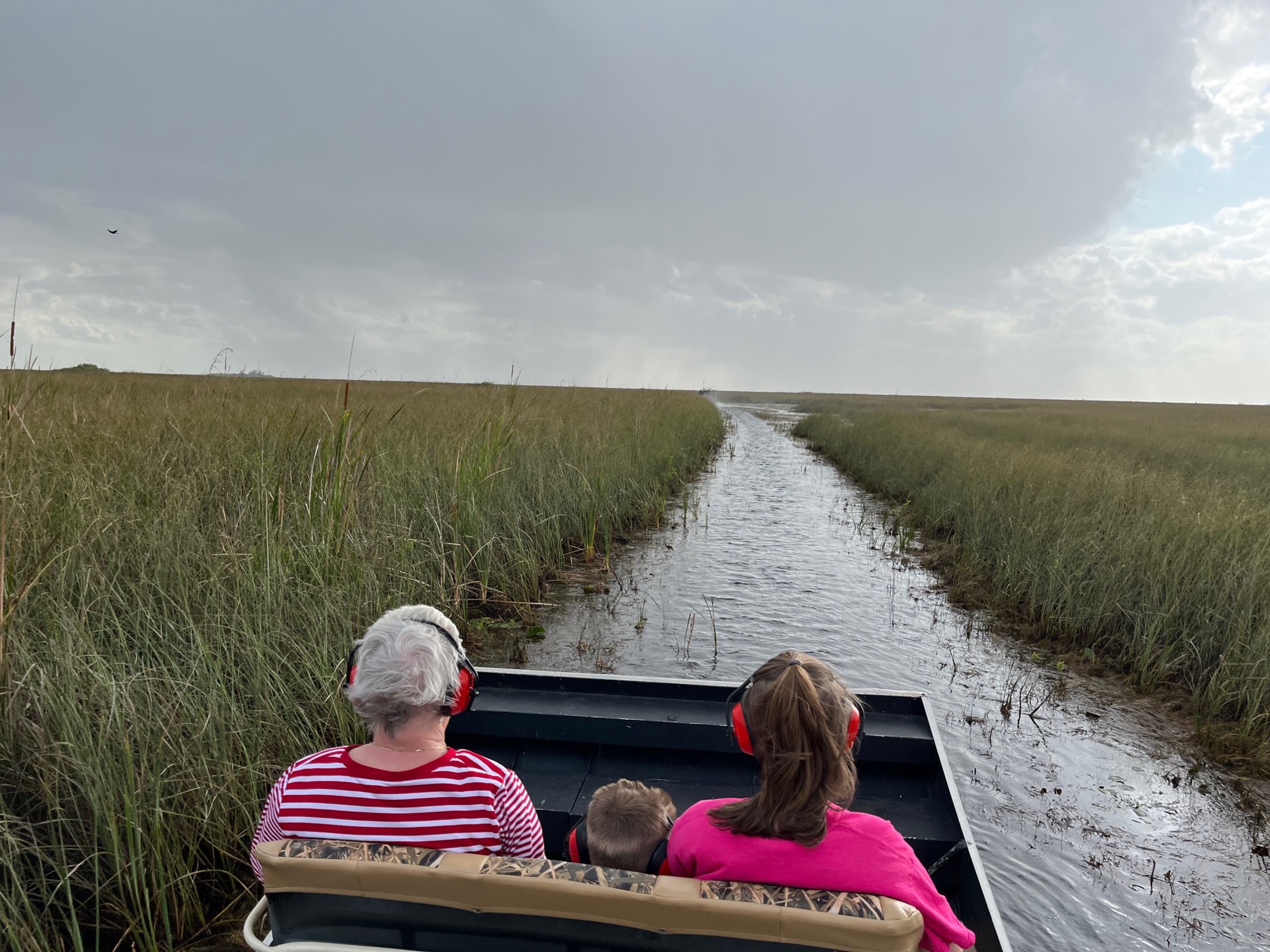
If comfort is your priority, the dry season (November through April) is the best time to airboat the Everglades. Daytime highs sit in the mid-70s to low-80s, humidity drops, rain is rare, and the marsh is at its most pleasant. This is peak visitor season in South Florida for good reason — every part of the day is enjoyable on the water.
That doesn't mean you should skip a summer ride. The wet season (May through October) delivers lush green sawgrass, dramatic skies, high water and the most active wildlife of the year — you just have to time your day. Afternoon thunderstorms are common from June through September, so book a morning tour. Mornings in summer are bright, calm and often storm-free, with the added bonus that alligators are supremely active in the warm water.
Whatever the season, early morning and the golden hour before sunset are the sweetest windows: calmest water, softest light, best photos and the most wildlife movement. Explore our sunrise airboat tours and sunset airboat tours to ride at the two most magical times of day.
Dry Season vs. Wet Season
Two very different experiences on the same wild marsh. Here's how to think about each.
Dry Season · Nov–Apr
Cooler mid-70s–low-80s highs, low humidity, little rain and clear skies. The most comfortable riding of the year and prime visitor season. Lower water levels concentrate alligators into the deeper gator holes and sloughs, which can make them easier to find.
Wet Season · May–Oct
Hot and humid upper-80s–low-90s highs, lush green sawgrass, high water and afternoon thunderstorms (especially Jun–Sep). Wildlife is at its most active. Ride in the morning to beat the storms and enjoy the calmest, most photogenic water.
The Best Time to Fish the Everglades
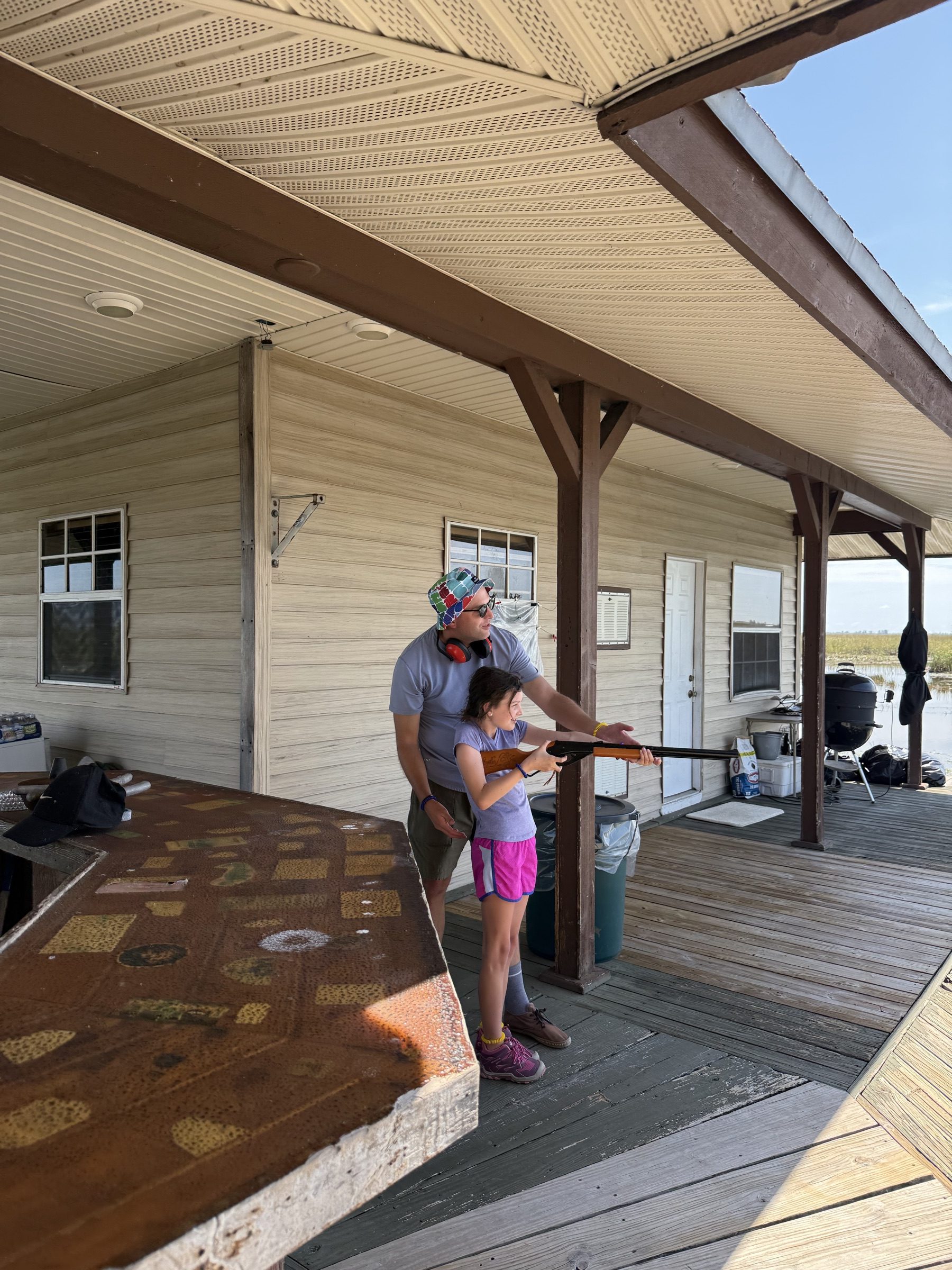
The Everglades is one of Florida's great freshwater fisheries, and the season shapes both what you catch and where. Largemouth bass fish best in the cooler dry-season months, with a classic spawn window from roughly December through March when big bass move shallow — prime time to target a trophy. Bluegill and other panfish stay reliable year-round and heat up in spring and early summer.
Peacock bass, the hard-fighting exotic that thrives in South Florida's canal system, are warm-water fish — they bite most aggressively in the warm months, roughly April through October, when water temperatures climb. Cold winter fronts slow them down, so plan peacock trips around the warmer stretches.
Water level is the other lever. In the dry season, falling water pulls fish into deeper canals, sloughs and gator holes, concentrating them and making them easier to pattern. In the wet season, high water spreads fish out across the flooded marsh. Either way, early morning and late afternoon are the most productive windows. Ready to cast a line? See our Everglades fishing tours.
Text or Call Captain Billy Today!
“Text or call me and I’ll get you out on the water — I can’t wait to see you out in the swamp!”— Captain Billy, owner & native Everglades guide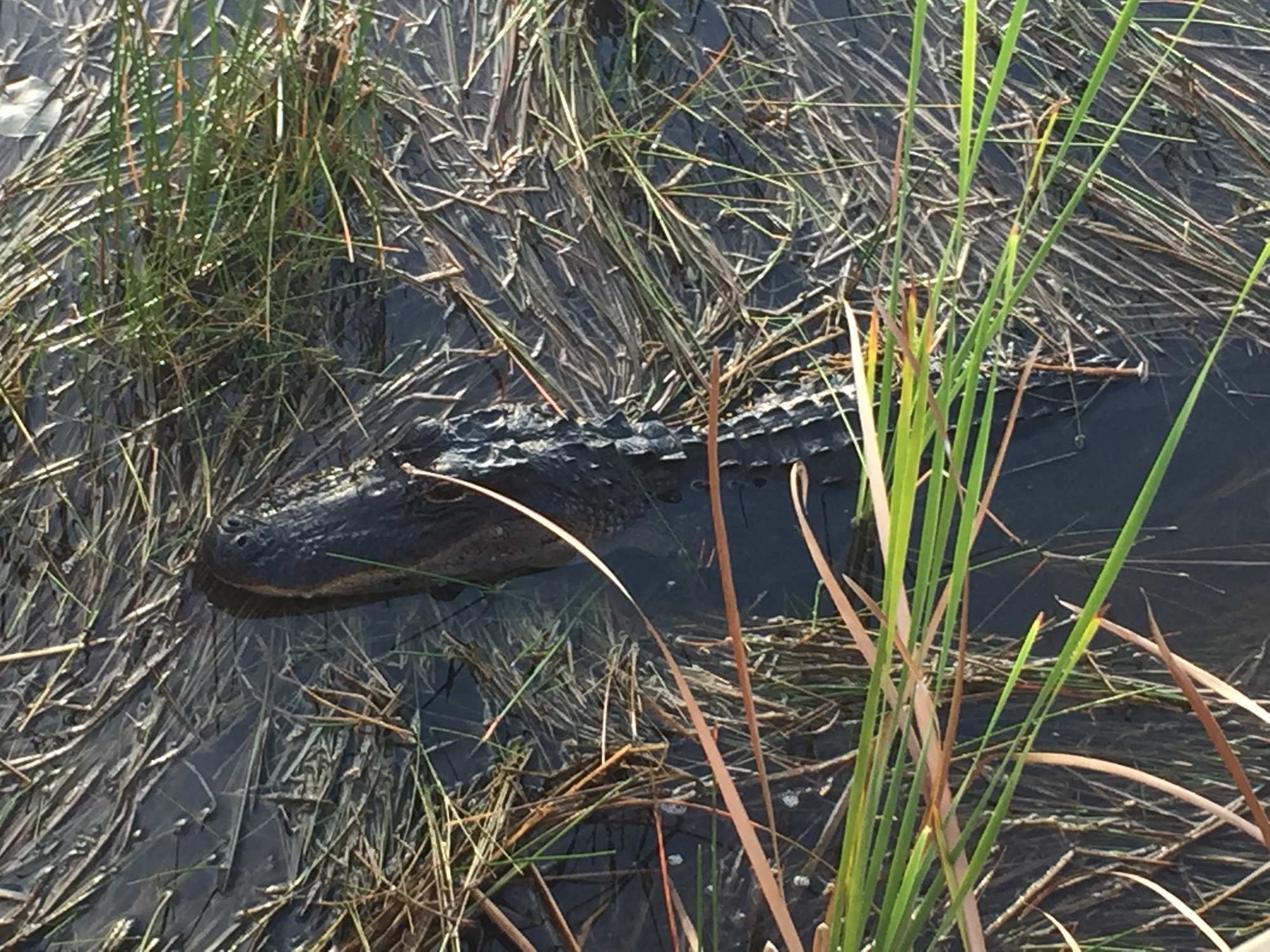
Alligator Activity by Season & Temperature
Alligators are cold-blooded, so their behavior tracks temperature closely — and knowing that pattern is the single best way to time a gator-focused ride. In the warm months (spring through fall), gators are most active: feeding, cruising, courting and hauling out in numbers. The warm summer water makes late spring and summer the peak season for sheer alligator activity, and courtship and bellowing peak around April into June.
In the cooler dry-season months, alligators slow down and spend more time conserving heat. On cool, sunny winter days you'll often find them basking — hauled out on banks and mudflats soaking up the sun — which actually makes them easier to spot and photograph. On genuinely cold mornings after a front they may sit low and still until the day warms, so a mid-morning ride once the sun is up is ideal in winter.
The reassuring truth for visitors: we ride a genuinely wild, gator-rich stretch of the Everglades and see alligators on the vast majority of tours in every season — our native captains simply adjust where they look based on the temperature and the water. Want the most dramatic gator experience? A warm-season night airboat tour puts you among glowing-eyed, active gators after dark.
Sunrise, Sunset & Golden Hour by Season
The Everglades is at its most beautiful at the edges of the day. In summer (June–August), the sun rises early — around 6:30 AM — and sets late, near 8:15 PM, giving long days and a late, lingering golden hour. In winter (December–January), sunrise is closer to 7:10 AM and sunset falls around 5:30 PM, so the golden hour comes early and the light is warm and soft against cool, clear air.
For photographers and anyone chasing the calmest water, aim for the first hour after sunrise or the last hour before sunset in any season. The marsh is glassy, the light is gold, the air is cool and wildlife is on the move. Our sunrise airboat tours catch the marsh waking up under mist, while our sunset airboat tours put you on the water for the Everglades' famous blazing skies. Because sunrise and sunset shift through the year, we time these rides to the actual sun — your booking confirmation lists the exact meeting time for your date.
Hurricane Season & How We Handle the Weather
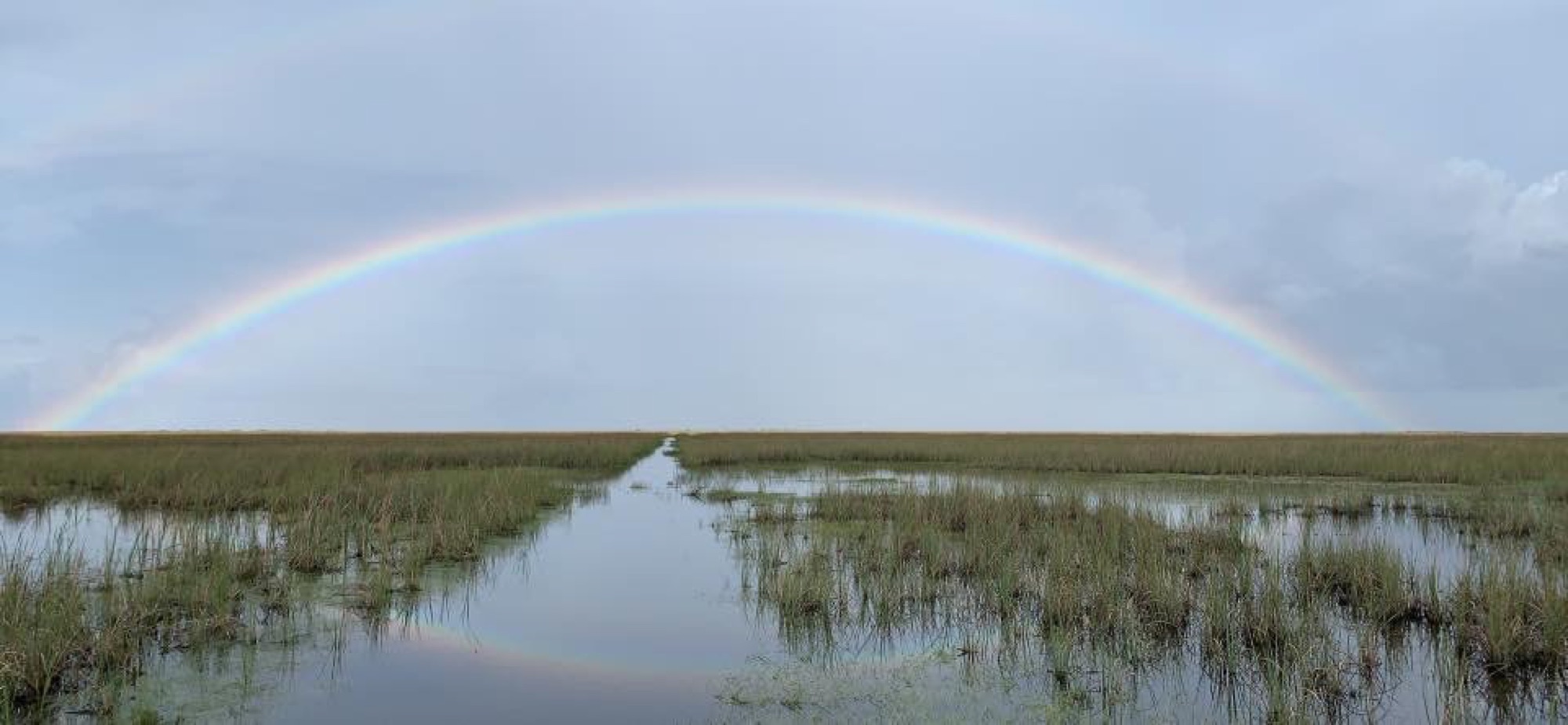
Atlantic hurricane season runs June 1 through November 30, and it overlaps most of the Everglades wet season. In practice, named storms are occasional events, not everyday ones — the far more common summer pattern is a bright sunny morning followed by a fast-moving afternoon thunderstorm that passes in minutes. That's exactly why we steer summer guests toward morning tours.
Safety always comes first. We watch the radar constantly, and we'll never send you out in lightning, high wind or genuinely unsafe conditions. Because Florida weather moves so fast, a shower on the forecast rarely means a cancelled day — often we simply shift your launch time by an hour and the marsh is perfect. If a storm or tropical system does affect your date, our tours are reschedule-friendly: see our cancellation policy for the details, and call us anytime at 561-660-2419 to check conditions before your ride.
Frequently Asked Questions
What is the best month to visit the Everglades?
For comfort, the dry-season months of December, January, February and March are the best time to visit the Everglades: highs in the mid-70s to low-80s, low humidity, little rain and clear skies. November and April are also excellent. If you're chasing peak wildlife activity and lush green sawgrass and don't mind heat, the summer months are spectacular too — just ride in the morning.
Does it rain every day in the Everglades in summer?
Not all day, no. From June through September the Everglades sees frequent — often near-daily — afternoon thunderstorms, but they're typically fast-moving and pass within 20–40 minutes. Mornings are usually bright, calm and storm-free. That's why we recommend booking a morning airboat tour in summer, so you're back before the afternoon storms build.
Can you airboat in the rain?
A light passing shower is usually no problem — the marsh looks beautiful in the rain and Florida showers clear fast. What we won't ride in is lightning, thunderstorms or high wind, for safety. We watch the radar closely and will shift your launch time or reschedule if a real storm rolls through. Call us at 561-660-2419 the day of your ride if the weather looks marginal.
When is the best time to see alligators in the Everglades?
Alligators are cold-blooded and most active in warm weather, so spring through fall offers the most gator movement, with courtship peaking around April to June. In the cooler dry season they slow down but bask in the sun on clear days, which makes them easy to spot. We see alligators on the vast majority of tours year-round — our captains just adjust where they look based on the temperature.
Is hurricane season a bad time for an airboat tour?
Not usually. Atlantic hurricane season runs June through November, but actual named storms are occasional — the everyday summer pattern is just brief afternoon thunderstorms. We ride throughout hurricane season, favor morning tours, and monitor conditions closely. If a storm or tropical system affects your date, our tours are reschedule-friendly. See our cancellation policy for details.
What is the best time of day for an airboat tour?
Early morning and the golden hour before sunset are the best times of day in any season: the water is calmest and most photogenic, the air is coolest, and wildlife is most active. In summer, mornings also let you beat the afternoon thunderstorms. Sunrise and sunset tours are our most popular for exactly these reasons.
Explore More Everglades Adventures
Ready to pick a tour? Here's where to go next.
Ready to Ride the Everglades?
Now you know exactly when to go — all that's left is to get on the water. Text or call Captain Billy and a real local captain's crew will help you pick the perfect time of year and time of day for your ride.
“Text or call me and I’ll get you out on the water — I can’t wait to see you out in the swamp!”— Captain Billy, owner & native Everglades guide